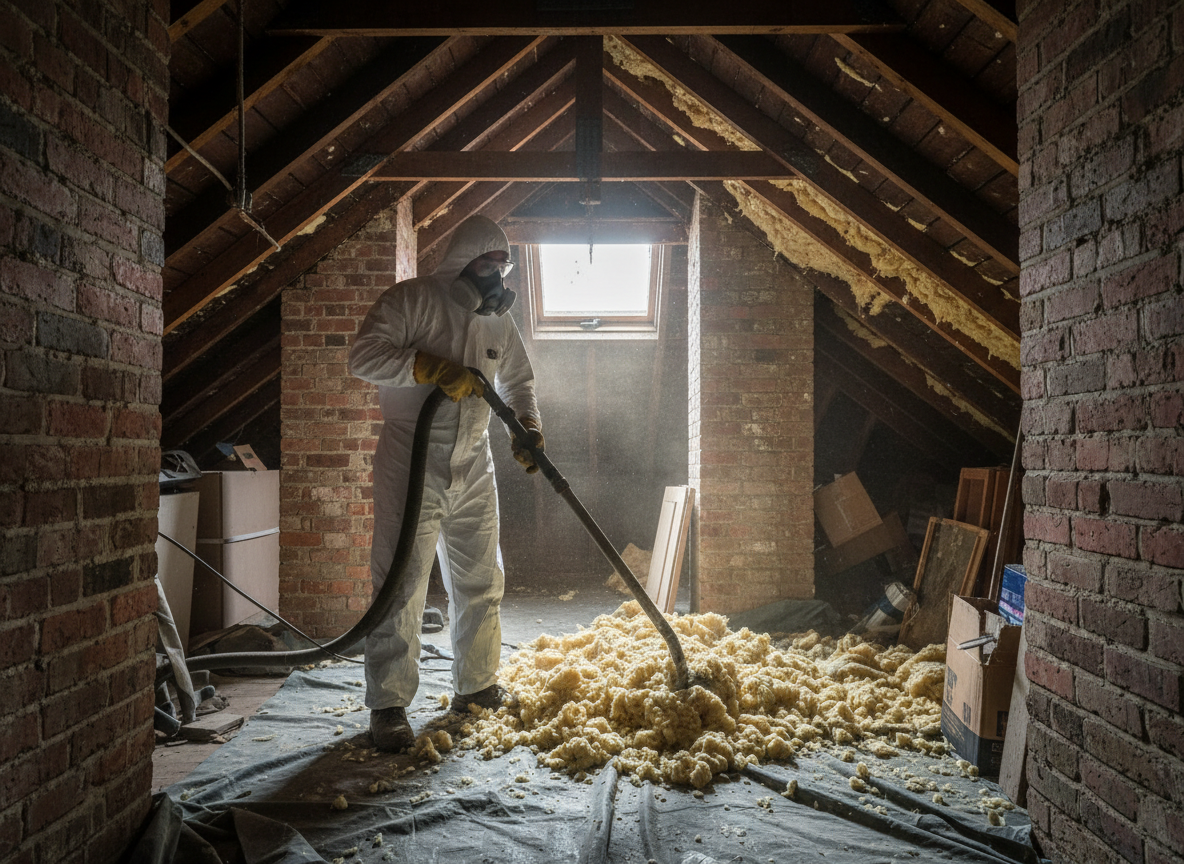
London's Victorian and Edwardian terraces, especially in areas like Islington around the N7 postcode, often have pitched roofs with lath and plaster ceilings that trap spray foam against original timbers. Removing closed-cell polyurethane in these spaces requires careful cutting to avoid disturbing fragile lathework or hidden electrical runs that predate modern building regs. Moisture from London's frequent rainfall can make the foam bond tighter to rafters, so crews work section by section to prevent pulling down ceiling plaster below.
Disposal follows Environment Agency rules for construction waste; foam offcuts and contaminated materials must be taken to licensed sites rather than general landfill. In North London homes, narrow loft hatches and shared chimney stacks add access challenges that change how containment sheeting and negative-air machines are set up. Homeowners sometimes attempt partial removal themselves, leaving residue that later causes condensation issues when new insulation is added.
Edge cases include foam applied over older mineral wool in 1970s extensions, where layers must be separated to avoid mixing waste streams. Roof ventilation checks are routine because blocked soffits in terraced streets can turn a removal job into a larger ventilation upgrade. All work starts with a visual survey for signs of water ingress common after heavy winter rain on slate roofs.
Technician insight
In London, the thing that catches most people out with Attic spray foam removal is how Victorian terraces in places like Islington have narrow eaves and shared party walls that trap moisture behind the foam; once winter temperatures drop, that trapped damp makes the material far harder to release cleanly without pulling plaster off ceilings below.
Islington Terrace Loft Clearance
Homeowner in a 1890s Islington terrace noticed musty smells after heavy autumn rain. We found closed-cell foam bonded directly to damp rafters and blocking original vents. After sectional removal and disposal, we cleared the vents and left the timbers ready for inspection.
How it works
- 1
Initial Survey
Access the attic via existing hatches in London terraces, check for asbestos, wiring and roof leaks before any foam is touched.
- 2
Containment Setup
Seal the loft space with sheeting and negative pressure to keep dust from drifting into living areas below.
- 3
Foam Extraction
Cut and peel closed-cell foam from rafters and ceilings in manageable sections, bagging material as work progresses.
- 4
Waste Removal and Disposal
Load sealed bags into vans for transport to licensed waste facilities serving the Greater London area.
- 5
Final Clean and Inspection
Vacuum remaining residue, inspect timbers for damage and confirm ventilation paths remain clear.
Pricing
Cost depends on attic size, foam thickness and access difficulty in older London stock; we provide clear quotes after survey.