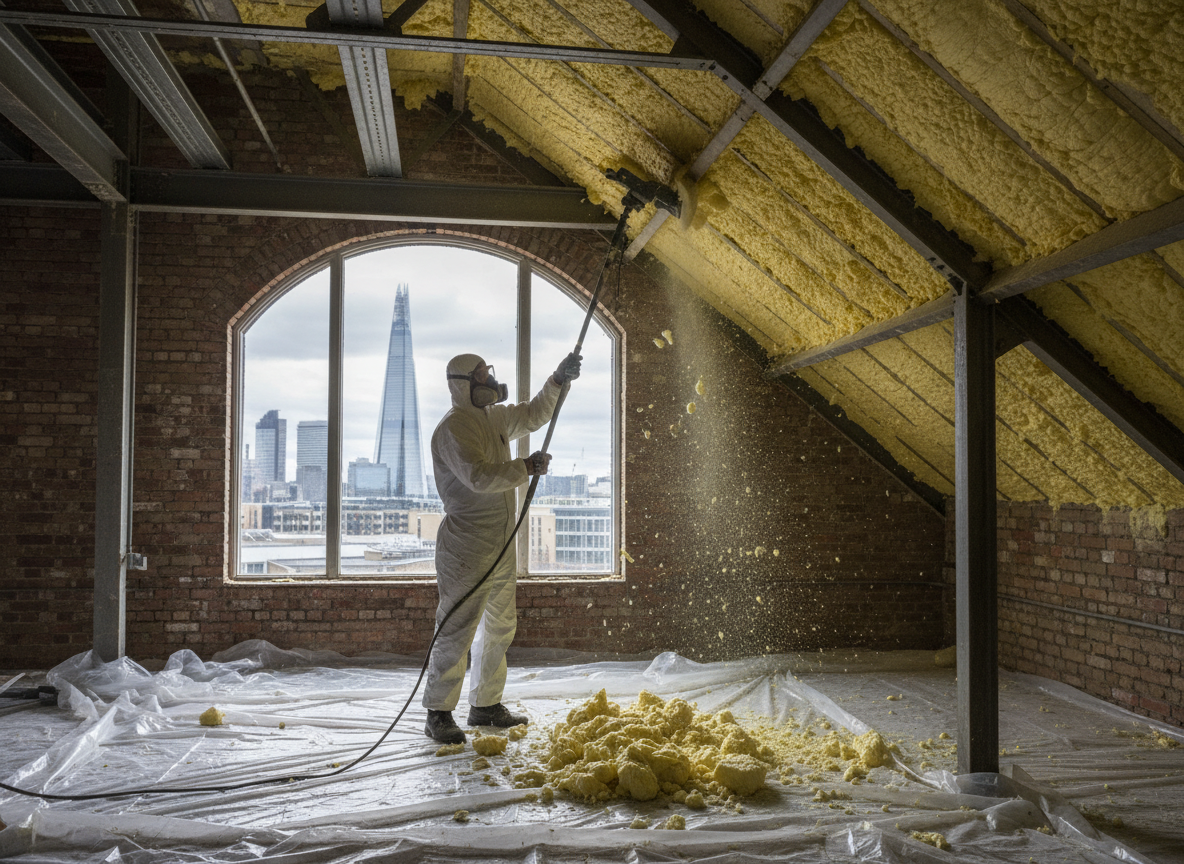
London commercial properties often feature spray foam applied to pitched roofs, steel beams and cavity walls in Victorian warehouses and 1960s office blocks. Removal requires isolating HVAC zones first because cured foam releases particulates that can travel through shared ventilation in multi-tenant buildings. We cut and bag material in sections to avoid overloading floors rated for lighter loads than modern standards demand.
Weather in the capital adds complexity: frequent rain means external roof work must be sequenced between showers, while internal condensation in unheated spaces can re-wet foam and increase weight during extraction. Near the canal network in Islington and Camden, higher humidity also slows adhesive release, so we use controlled heat rather than solvents that could affect neighbouring units.
Edge cases include foam bonded to asbestos-containing soffits common in pre-1980 commercial stock and foam that has wicked into timber joists in converted mews buildings. We stop work and test whenever we encounter unknown substrates, then coordinate with the building manager for licensed abatement crews before resuming.
Code compliance in Greater London requires notification to the local authority when work disturbs insulation in buildings over 11 metres; we supply the necessary method statements and dust-control plans so tenants can remain open during phased removal.
Technician insight
In London the thing that catches most people out with Commercial Spray Foam Removal is how often the foam has wicked behind original lath and plaster in 19th-century warehouses around N7. Once you open a section you find it has bridged cavities and is holding moisture against the brick, so the job doubles in size before you even reach the steelwork.
Office Unit in Islington
A ground-floor commercial unit near Caledonian Road had spray foam on the ceiling that was shedding flakes into the workspace. We found the foam had been applied over failing bitumen on the concrete slab above. We isolated the area, removed the foam in 1.2 m sections, cleaned the slab and installed temporary ventilation until the client arranged new insulation.
How it works
- 1
Site Survey and Containment
We inspect the commercial space, identify foam locations and install negative-pressure barriers to protect adjacent areas.
- 2
Material Separation
Foam is scored and lifted in controlled sections using hand tools and low-speed grinders to limit dust.
- 3
Substrate Cleaning
Residual adhesive is removed from brick, concrete or steel so new insulation or coatings can bond properly.
- 4
Waste Removal and Verification
Bagged waste is taken off-site and surfaces are checked with moisture meters before handover.
Pricing
Upfront quotes after on-site inspection; final cost depends on access height, substrate condition and whether asbestos testing is required.