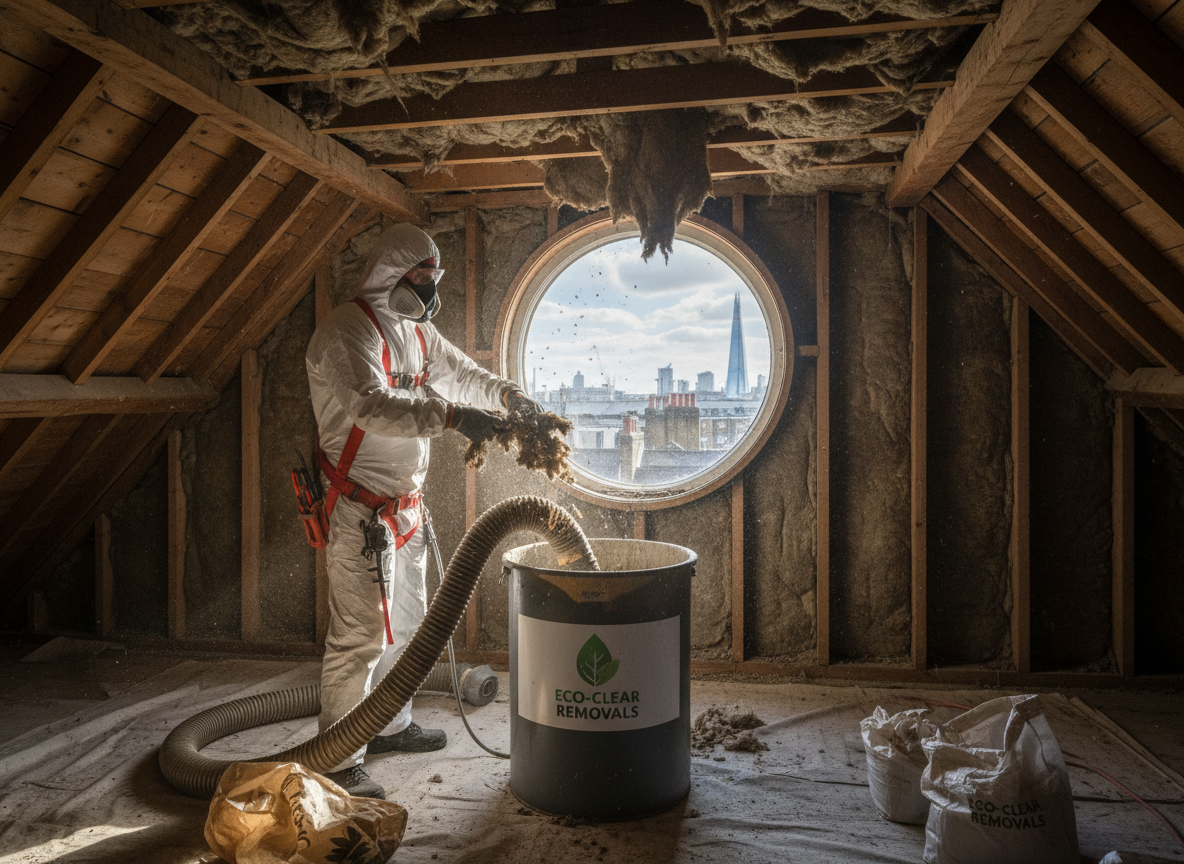
London’s Victorian and Edwardian terraces in neighbourhoods like Islington and Holloway often have spray foam applied directly to rafters and between joists in the 1990s and 2000s. Removing it without damaging original lath and plaster ceilings or timber requires careful cutting and negative-pressure containment so fibres do not migrate into living spaces below. Wet winter weather common in the capital can leave residual moisture trapped behind the foam, raising the risk of hidden mould once the insulation is stripped.
Environmentally responsible disposal means separating the polyurethane from any timber or plasterboard so the waste can be sent to licensed recycling facilities rather than landfill. In properties near the Regent’s Canal or on clay-heavy ground in north London, poor ventilation and rising damp can make foam removal more complex because the substrate must be dried before new insulation is considered. Crews work from our 24/7 base at 1 Hillmarton Road to reach sites quickly when homeowners discover failed foam during roof leaks.
Building regulations in Greater London now require notification for any insulation works that affect ventilation paths in lofts. Technicians check for original eaves vents and ensure they remain unobstructed after removal, preventing future condensation problems that are common once modern foam is taken out of older roofs.
Seasonal Considerations
London’s mild but persistently damp winters mean most removal jobs are scheduled between March and October when lofts can be properly ventilated during the work. Homeowners in N7 and surrounding postcodes often notice musty smells first after heavy autumn rain, prompting calls for inspection before the foam begins to degrade further.
Technician insight
In London, the thing that catches most people out with environmentally friendly insulation removal is the narrow access hatches and fragile lath-and-plaster ceilings in Islington terraces; once you start pulling foam you can bring half the ceiling down if you have not propped and contained first.
Holloway Terrace Loft
Homeowner in N7 noticed damp patches after winter rain. We found closed-cell foam trapping moisture against rafters with early mould. After negative-pressure removal and waste segregation the loft dried naturally over two weeks and original ventilation paths were restored without ceiling damage.
How it works
- 1
Site Assessment
Inspect loft and roof structure, identify foam type, note access constraints typical of London terraces, and check for moisture or timber damage.
- 2
Containment Setup
Install dust barriers and negative-pressure extraction to protect living areas below while working around original ceilings and narrow loft hatches.
- 3
Foam Removal
Cut and peel foam in sections, keeping timber and plaster intact, then bag waste for segregated recycling.
- 4
Final Clean and Ventilation Check
Vacuum residues, confirm eaves and ridge vents remain clear, and advise on drying time before any new insulation is installed.
Pricing
Cost depends on loft size, foam depth, access difficulty and whether drying or minor timber repairs are needed; site visit required for accurate quote.