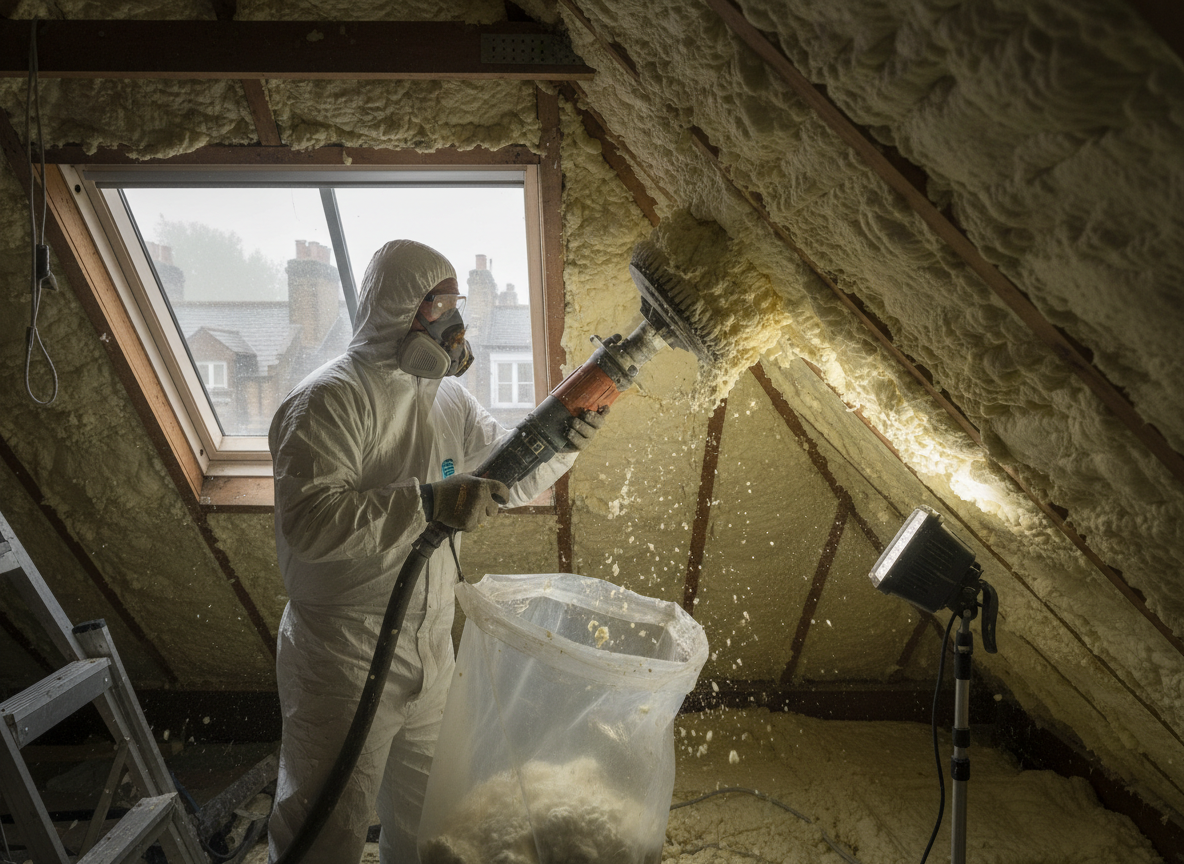
Thermal spray foam in London properties often sits between rafters in Victorian and Edwardian terraces common across Islington, Holloway and surrounding N7 postcodes. Over time the material traps moisture against original lath and plaster or timber, especially during the city's frequent wet winters when rain drives through poorly ventilated roof spaces. Removal requires controlled cutting and scraping to prevent fibres drifting into living areas below while protecting historic ceiling details that many local homes still retain.
Greater London weather patterns add extra steps. Persistent humidity means the foam stays flexible longer than in drier regions, so crews must work in sections and bag waste immediately to avoid re-wetting. In terraced houses the party walls limit access, forcing use of smaller tools and temporary dust barriers between neighbouring properties. Older stock also frequently contains hidden electrical cables and pipework that only become visible once the foam is lifted.
Regulatory considerations in London include checking whether the foam was installed over original insulation or directly onto roof felt, as either case changes disposal routes. Crews must separate contaminated timber from clean waste before leaving site, and they often recommend improved ridge and eaves ventilation once the foam is gone to reduce future condensation risk in these tightly packed streets.
Technician insight
In London, the thing that catches most people out with thermal spray foam removal is how tightly it bonds to the sagging lath and plaster ceilings in pre-1930s terraces around Islington and Holloway, especially after winter damp has softened the plaster underneath.
N7 Terrace Loft Clearance
Homeowner in a Holloway terrace reported persistent loft condensation. Inspection showed thermal spray foam applied directly over original felt, trapping moisture. We removed the foam in sections, cleared residue from between rafters and opened eaves vents to restore airflow.
How it works
- 1
Site Inspection
Survey the loft or wall cavity in the London property, noting foam thickness, substrate condition and access constraints typical of terraced housing.
- 2
Protection Setup
Lay floor protection and seal doorways to contain dust before any cutting begins, especially important in multi-occupancy buildings around N7.
- 3
Foam Extraction
Cut and lift sections methodically, bagging material on site to prevent moisture re-absorption during London's damp conditions.
- 4
Final Clean and Ventilation Check
Remove residue, inspect for hidden damage and advise on airflow improvements suited to the property's age and roof structure.
Pricing
Upfront quotes after inspection; cost depends on property age, foam depth and access in London terraces.