2026-10-23 ·
Winter Checks For Spray Foam Problems In London Homes
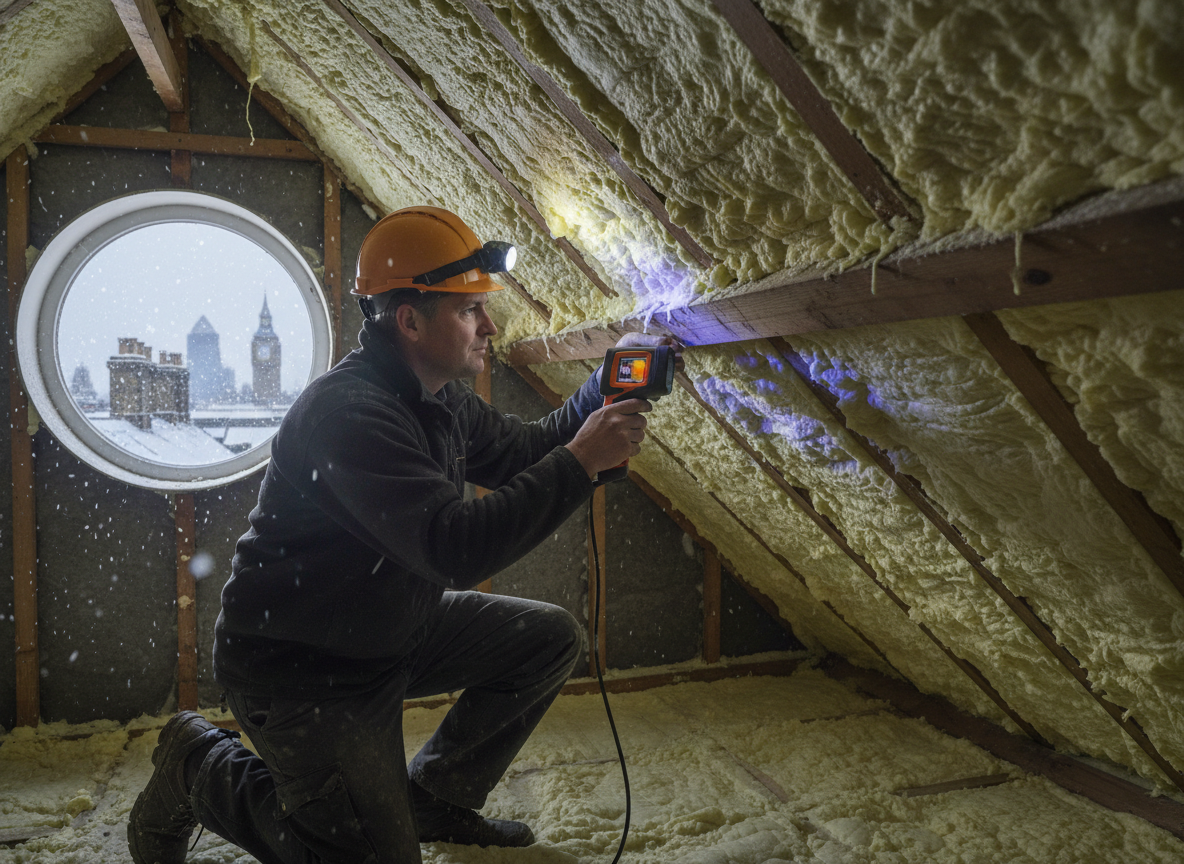
Winter checks for spray foam problems in London homes begin with a loft inspection for condensation and trapped moisture, which typically appear within the first 2-4 weeks of sustained temperatures below 8°C combined with high rainfall. Older Victorian and Edwardian terraces common in N7 and nearby streets often have spray foam applied directly to rafters, and the area's frequent damp winters allow water vapor to collect rather than escape, leading to hidden rot in timber and reduced insulation performance.
Spotting Condensation and Moisture in Lofts
London winters bring persistent drizzle and humidity levels that stay above 80% for weeks, especially from November through February. In neighborhoods like Holloway and Barnsbury, many 19th-century terraces have limited roof ventilation, so spray foam traps moisture against rafters instead of allowing it to dry. Homeowners should look for water streaks on the foam surface, soft spots in timber, and a musty smell that intensifies after rain. Checking these signs early prevents larger issues such as ceiling staining or mold growth that spreads into living spaces below. Regular visual checks during the coldest months help identify where open-cell foam has absorbed water and lost its insulating value, a common problem in properties built before 1930.
Inspecting for Mold and Timber Decay
Damp London winters accelerate mold on spray foam surfaces and behind it on rafters, particularly in Highbury and Archway homes where roof leaks from aging tiles compound the issue. Closed-cell foam can hide decay until structural weakness appears, while open-cell types absorb moisture and promote fungal growth within months. Walk the loft with a torch and check for black spotting, white powdery residue, or wood that crumbles when probed. Pay attention to areas near chimney breasts and valleys where water collects. These conditions worsen when indoor heating creates temperature differentials that drive more vapor upward into the roof space, making winter the clearest time to spot problems before they require extensive residential spray foam removal.
Assessing Ventilation and Insulation Performance
Many London properties in Kentish Town and Finsbury Park have spray foam covering original roof vents, reducing airflow that normally manages winter condensation. Test insulation effectiveness by feeling for cold spots on ceilings below the loft during a cold snap. Measure room temperatures against expected ranges; a drop of more than 3°C overnight often signals failed foam. In these older terraces, foam applied 8-12 years ago frequently shows shrinkage or cracking along rafter lines. Document any gaps or delamination with photos, noting that London's clay soil and occasional flooding increase ground moisture that rises into roof voids through poor underfloor ventilation.
Professional Assessment and Next Steps
An insulation assessment provides a detailed report on foam condition and moisture levels using moisture meters and thermal imaging suited to Greater London housing stock. Technicians familiar with local Victorian construction can distinguish between normal winter condensation and foam-related failures that affect mortgage valuations. Homeowners in Caledonian Road or Camden Town benefit from scheduling checks before spring rains arrive, as early detection limits removal scope. Review the article What Affects Spray Foam Removal Costs Across Greater London to understand factors like access difficulty in terraced lofts and waste disposal requirements. Contact CleanEdge group at 1 Hillmarton Rd, London, N7 9JE for 24/7 support when issues are confirmed.