2026-10-23 ·
What Affects Spray Foam Removal Costs Across Greater London
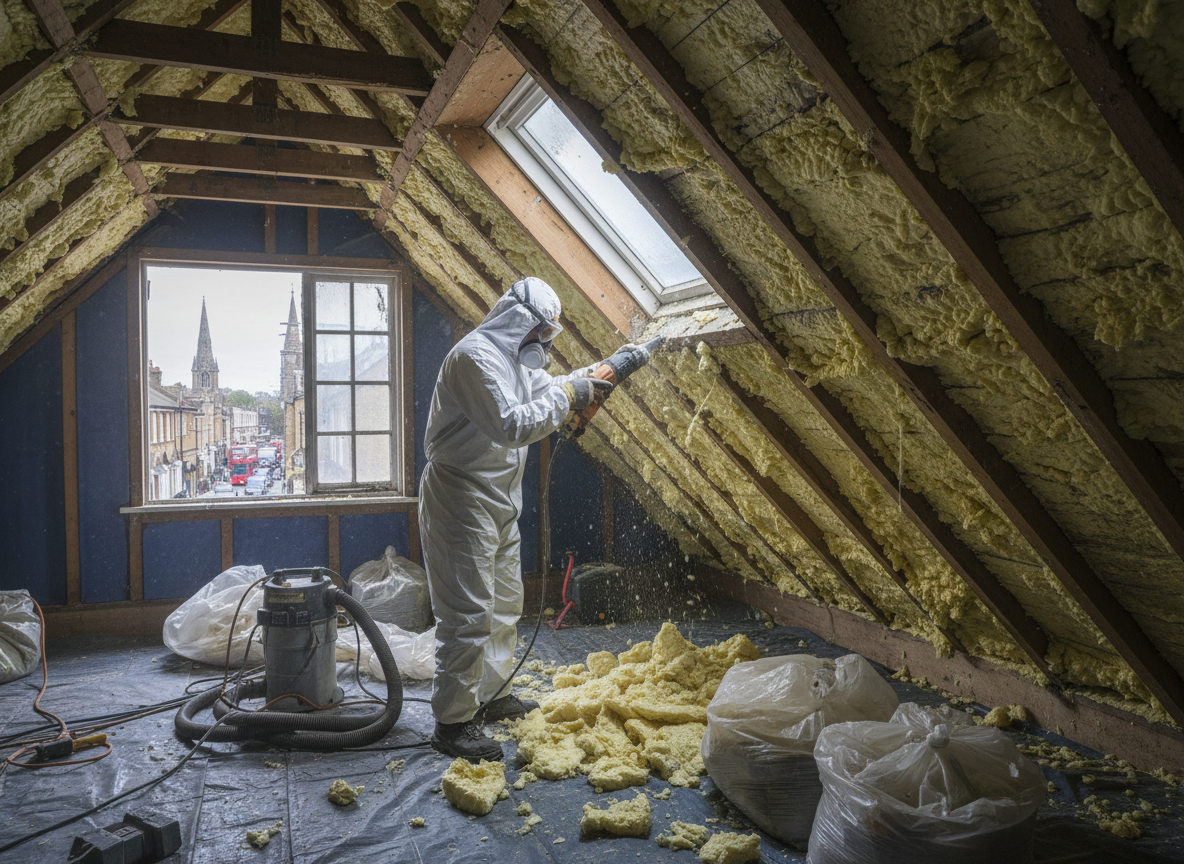
Spray foam removal costs across Greater London typically range according to the home's construction era, the foam's cell structure, and how easily crews can reach the material without damaging original features. Older stock in areas such as Holloway and Barnsbury often requires extra care around lath-and-plaster ceilings, while newer builds near Caledonian Road present different access constraints. Weather exposure and moisture levels common to the London area further influence how much preparation and containment is needed on each job.
Victorian and Edwardian Housing Stock
Many properties in N7 and surrounding postcodes date from the late 1800s and early 1900s. These terraces feature narrow roof voids, original timber joists, and layered insulation that spray foam was often applied over. Removing closed-cell foam from such spaces demands slower mechanical methods to avoid cracking fragile plasterwork below. In contrast, interwar semis in Highbury and Archway usually have slightly larger lofts but still tight eaves that limit equipment movement. Crews working from the 1 Hillmarton Rd base routinely adjust containment setups for these tight footprints, extending labour hours compared with open-plan modern lofts.
Foam Type and Thickness Variations
Open-cell foam, common in residential lofts across Camden Town and Kentish Town, peels away more readily than closed-cell material but leaves behind residue that must be neutralised before new insulation goes in. Closed-cell applications, often found in converted warehouses near Finsbury Park, bond tightly to masonry and require thermal or dry ice methods for clean separation. Thickness also matters: 150 mm layers take longer to excise than 75 mm layers, directly affecting crew time and disposal volume. Homeowners can review the differences between these approaches on the open cell spray foam removal and closed cell spray foam removal pages.
Access, Terrain and Local Constraints
Narrow streets and limited parking in Barnsbury and Caledonian Road mean equipment must be carried in rather than driven close, adding setup time. Rear access via shared gardens is often the only route into loft spaces, requiring protection of neighbouring boundaries. Ground conditions after rain can turn clay-heavy gardens into slippery paths, slowing material removal and increasing safety measures. These practical realities vary block by block and explain why quotes differ even between two similar-sized homes a few streets apart.
Seasonal Weather and Moisture Effects
London's frequent damp winters and mild summers affect how foam behaves during removal. Cold temperatures can make closed-cell material more brittle, sometimes requiring pre-warming steps, while summer humidity slows drying after any water-based cleaning. Properties near the Regent's Canal or low-lying zones in Kentish Town often show higher moisture readings that must be addressed before new insulation installation. Checking for these seasonal issues early is covered in the guide Winter Checks For Spray Foam Problems In London Homes.
Planning Rules and Neighbour Considerations
Greater London planning requirements can add steps when work affects the external envelope or shared structures. Listed buildings in parts of Holloway and Camden Town may need additional permissions that extend project timelines. Noise and dust control measures are stricter in dense terraces, influencing method selection and therefore cost. Readers facing these hurdles can find further detail in Local Planning Rules For Insulation Removal In Greater London.
CleanEdge group operates 24/7 from 1 Hillmarton Rd, London, N7 9JE and handles jobs throughout these neighbourhoods with methods matched to each property's specific constraints.